Concrete and driveway permits in North Carolina: what you need before you pour
By Rod Burnett · Updated 2026-07-03
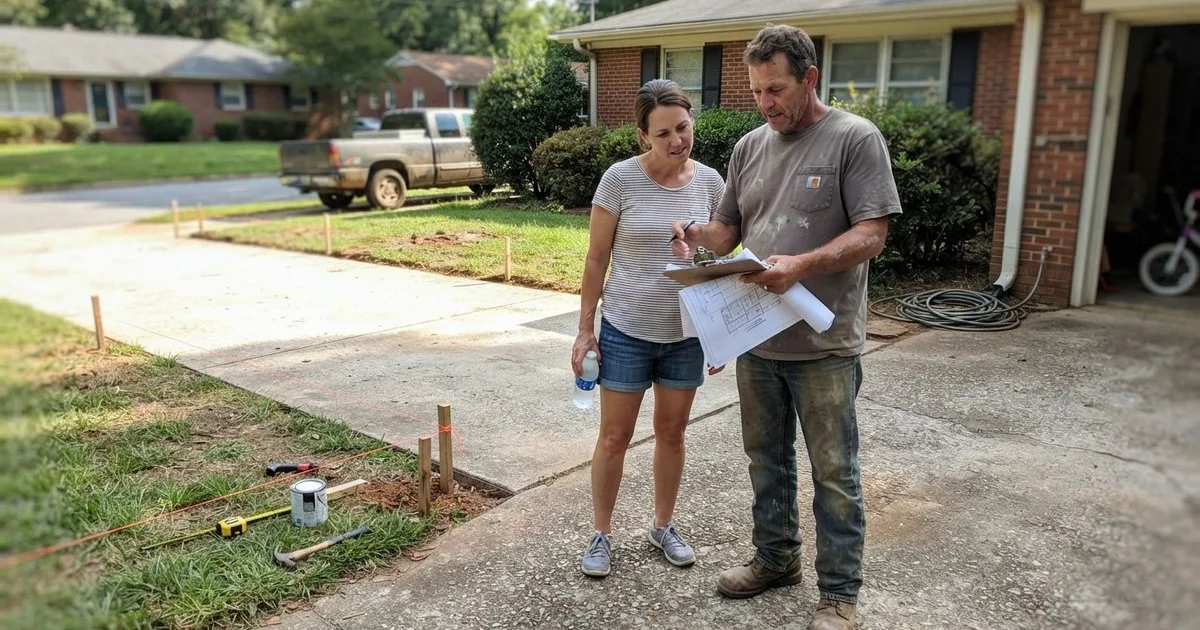
This is general information about how concrete permitting typically works in North Carolina; it is not legal advice, and requirements vary by city and county. Always confirm specifics with your local building or planning department before work starts.
Permitting for concrete work is one of those details that is easy to overlook until it causes a problem, either during the project or when you go to sell the house years later. Here is what generally triggers a permit requirement and who is supposed to handle it.
What usually requires a permit
- A new driveway apron or curb cut connecting to a public street
- Work that changes drainage patterns affecting neighboring properties or the street
- A driveway or slab tied into a new structure, like a garage
- Larger foundation or structural slab work
- Some commercial flatwork, parking lots, and loading areas, which often face additional code requirements
What often does not require a separate permit
- Replacing an existing driveway on the same footprint with no drainage changes
- A small backyard patio not connected to the public right-of-way
- Minor repair or resurfacing of an existing slab
These categories are common patterns across North Carolina municipalities, not a guarantee for your specific address. Charlotte, Gastonia, Huntersville, Concord, and Rock Hill each have their own permitting office and can have different thresholds for what triggers a review. Beyond permits, HOA covenants and property-line setbacks can add another layer of rules worth checking before you pour; see our guide on HOA rules and property lines.
| Project type | Permit likelihood |
|---|---|
| New driveway with curb cut | Often required |
| Driveway replacement, same footprint | Often not required |
| Foundation or structural slab | Usually required |
| Backyard patio, no drainage change | Often not required |
| Commercial flatwork or parking lot | Usually required, additional code review |
Who pulls the permit
A licensed local contractor generally knows the specific requirements for your jurisdiction and pulls any needed permit as part of the job, folding the fee into the quote. This is one of the practical advantages of hiring a licensed contractor over an unlicensed one: they carry the liability and know the process, rather than leaving it to you to figure out.
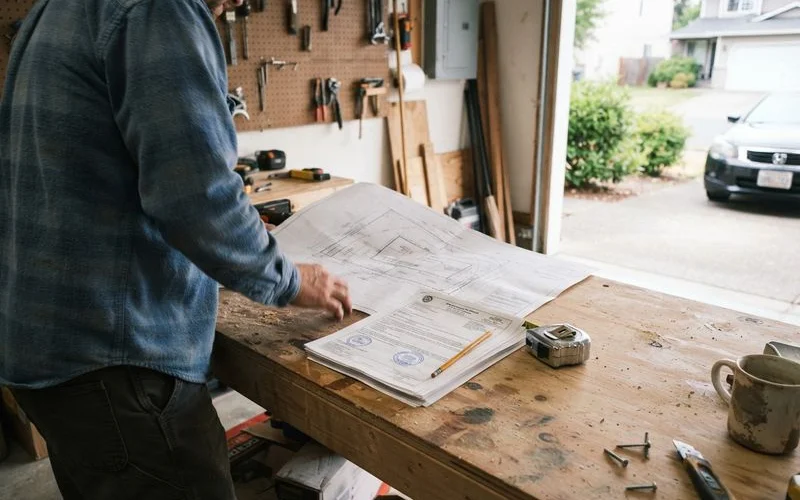
Why skipping a required permit is a bad trade
Unpermitted work that should have been permitted can surface at the worst possible time: during a home sale, when a buyer’s inspector or the closing attorney flags it, or after storm damage, when an insurance claim gets denied because the original work was never inspected. Fixing it after the fact, sometimes including tearing out and redoing the work to bring it up to code, almost always costs more than the permit fee would have.
Checking a contractor’s license and insurance
Since permitting and licensing tend to go together, it is worth confirming a contractor’s license and insurance status directly rather than assuming it from their marketing. Our directory of licensed and insured concrete contractors highlights local companies that have documented licensing and insurance, which is a reasonable starting point if permit compliance matters to you.
Municipalities in this area are not all the same
Charlotte, Gastonia, Huntersville, Concord, and Rock Hill each run their own permitting process, and a rule that applies in one city may not apply the same way just a few miles away across a county line. If your property sits near a municipal boundary, confirm which jurisdiction’s rules actually apply before assuming based on your mailing address alone.
How long permitting typically adds to a timeline
Where a permit is required, plan for it to add time to the front end of a project rather than the pour itself. A straightforward residential permit review often takes anywhere from a few days to a couple of weeks depending on the municipality and how busy the local building department is at the time. Larger commercial or structural permits can take longer, sometimes involving more than one round of review.
The simplest way to avoid a permitting mistake
Ask any contractor you are considering, in writing, whether your specific project needs a permit and who is responsible for pulling it. A contractor who cannot answer this clearly, or who suggests skipping a permit to save time or money, is a signal to look elsewhere.
Browse our directory homepage to compare licensed contractors across categories, and see our ranking methodology for how licensing and insurance factor into a contractor’s score.
FAQ
- Do I need a permit for a new concrete driveway in North Carolina?
- It depends on your city or county and whether the driveway involves a new curb cut, changes drainage, or crosses a public right-of-way. Many straightforward driveway replacements on an existing footprint do not need a separate permit, but new driveways or ones affecting the street often do.
- Who is responsible for getting the permit, me or the contractor?
- A licensed contractor will typically pull the permit as part of the job and build the cost into the quote. If you are hiring an unlicensed handyman or doing it yourself, the responsibility falls on you, and you should confirm requirements with your local building department before work starts.
- What happens if concrete work is done without a required permit?
- Consequences vary by jurisdiction but can include fines, a stop-work order, and being required to remove or redo the work to bring it up to code. It can also complicate selling the home later if the work was never properly permitted and inspected.
- Does a patio or backyard slab need the same permits as a driveway?
- Often patios and interior-yard slabs have lighter requirements than driveways, since they typically do not touch the public right-of-way or street drainage. Requirements still vary by municipality, so it is worth a quick check with your local permitting office for anything beyond a small, at-grade patio.