HOA rules and property lines: what to check before pouring a driveway or patio
By Rod Burnett · Updated 2026-07-12
This is general information about common HOA and property-line considerations; it is not legal advice. Your specific covenants, deed, and local rules control, so confirm directly with your HOA and a licensed surveyor before starting work near a boundary.
A driveway or patio project can run into two kinds of approval issues that have nothing to do with the concrete itself: HOA rules and property boundaries. Both are worth checking before a contractor breaks ground, not after. Your municipality may also require a building permit on top of these; see our guide on concrete and driveway permits in North Carolina for what typically triggers one.
HOA architectural review
Most HOAs require some form of review for exterior changes, and a new patio, an expanded driveway, or even a change in finish or color on an existing one often falls under that requirement. Requirements vary a lot between associations: some just want a simple notification, others require a formal submission with dimensions and material specs, and some have restrictions on driveway width, patio placement relative to setbacks, or approved finish colors.
| Step | Why it matters |
|---|---|
| Review your HOA covenants (CC&Rs) | Confirms whether approval is required at all |
| Submit plans if required | Avoids a violation notice after the work is done |
| Check finish and color restrictions | Some HOAs restrict driveway or patio colors and materials |
| Confirm setback rules | Some associations require distance from property lines beyond city code |
Why property lines matter more than people expect
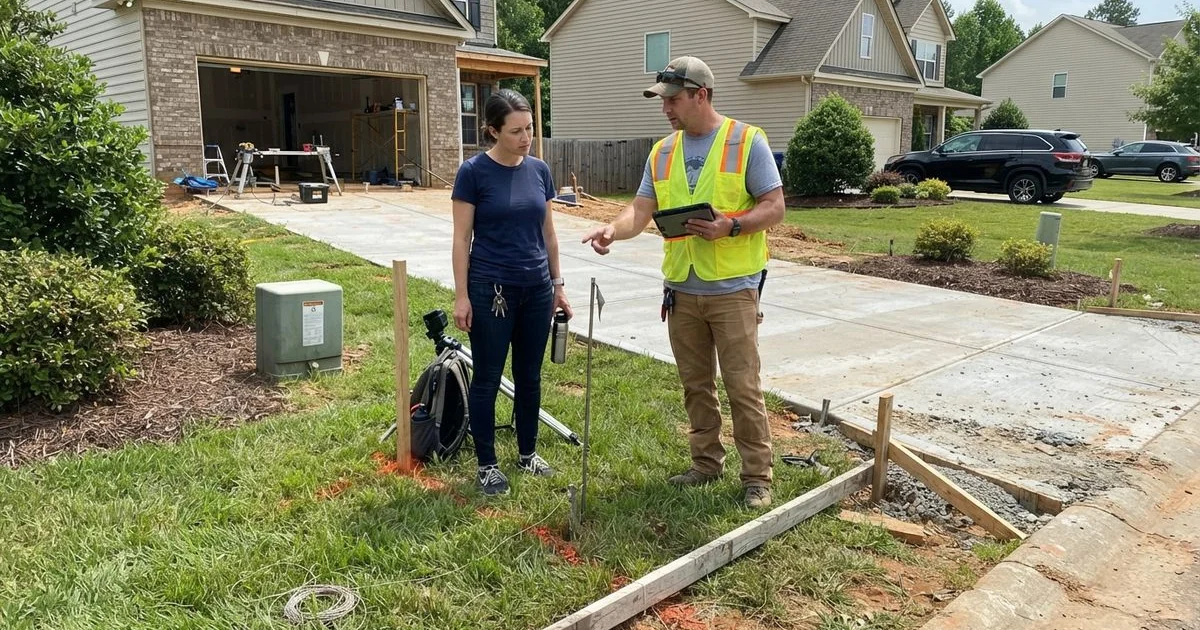
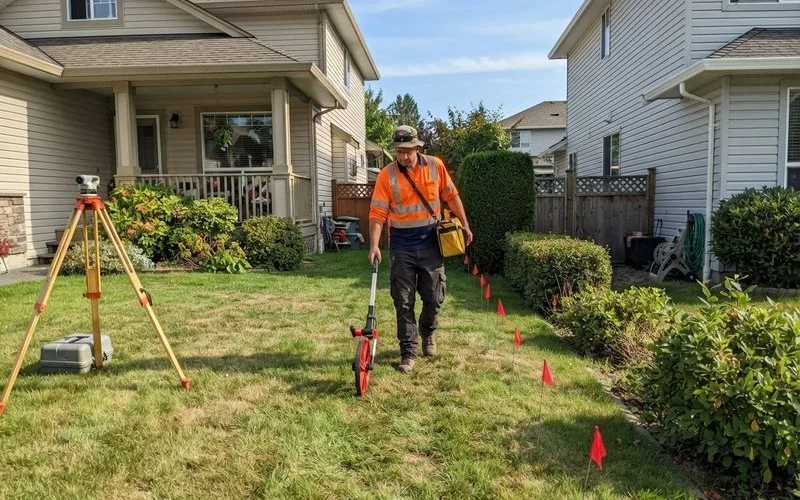
A driveway or patio that unintentionally crosses onto a neighbor’s property, even by a foot, can turn into a real dispute, sometimes requiring the work to be removed and redone. This happens more often than you would think, especially on older properties where fences or landscaping do not actually mark the recorded boundary. A recorded survey, not a fence line or a guess, is the only reliable source for where your property actually ends.
Keeping a paper trail
Save every piece of HOA correspondence, your approval letter or email, submitted plans, and any conditions attached to the approval. If a question comes up years later, during a home sale or a dispute with a new neighbor, having the original approval on hand is far easier than trying to reconstruct what was agreed to from memory.
Easements: the boundary issue people forget
Even within your own property line, a utility easement can restrict what you are allowed to build over it. A driveway or patio poured over a buried utility line easement without checking first can mean the utility company has the right to dig it up later without paying for the concrete replacement. Checking your property’s recorded easements, usually available through your county’s property records or your closing documents, is a five-minute check that avoids a much bigger headache later.
What to do before the contractor starts
Pull your HOA covenants and your recorded survey (or order one if you do not have it) before finalizing project plans. If your project sits anywhere near a boundary line or an easement, confirm the exact location with a licensed surveyor rather than estimating from a fence or old stakes. A reputable local contractor has likely dealt with this before and can flag an obvious issue, but the legal responsibility to confirm boundaries and approvals ultimately sits with the property owner, not the contractor.
Timing your project around HOA review
Architectural review boards often meet on a set schedule, monthly in many associations, rather than approving requests as they come in. Submitting your plans well before you hope to start work avoids the frustrating situation of a contractor ready to begin while approval is still sitting on a board’s agenda for weeks. Ask your HOA management company directly what their typical review turnaround is before you set a start date with a contractor.
Choosing a contractor who works within these constraints
A contractor experienced in this market has usually handled HOA submissions and boundary checks before and can tell you what documentation to expect from your specific association or county. Browse our directory homepage to compare local concrete contractors, and see our ranking methodology for how contractors are scored on reliability and follow-through, which matters here as much as workmanship since approval delays are a common source of project friction.
FAQ
- Does my HOA need to approve a new driveway or patio?
- If you have an HOA, most require some form of architectural review for exterior changes, including new patios, driveway expansions, or a change in finish or color. Check your specific covenants, since requirements vary widely between associations.
- What happens if I build without HOA approval when it was required?
- Consequences vary by association but can include fines, a formal violation notice, and in some cases a requirement to remove or modify the work at your own cost. It is generally far easier to get approval first than to fix a violation after the fact.
- How do I know exactly where my property line is?
- A recorded property survey is the most reliable source. If you do not have one from your closing documents, a licensed surveyor can locate the boundary markers, which is worth doing before any project near a property line.
- Can a neighbor object to my new driveway or patio?
- If the work stays within your property line and complies with any HOA rules and local permitting, a neighbor's objection alone generally does not stop the project. Disputes tend to arise when a project actually encroaches on a shared boundary or easement.