Making driveways and walkways safer for aging parents
By Rod Burnett · Updated 2026-07-13
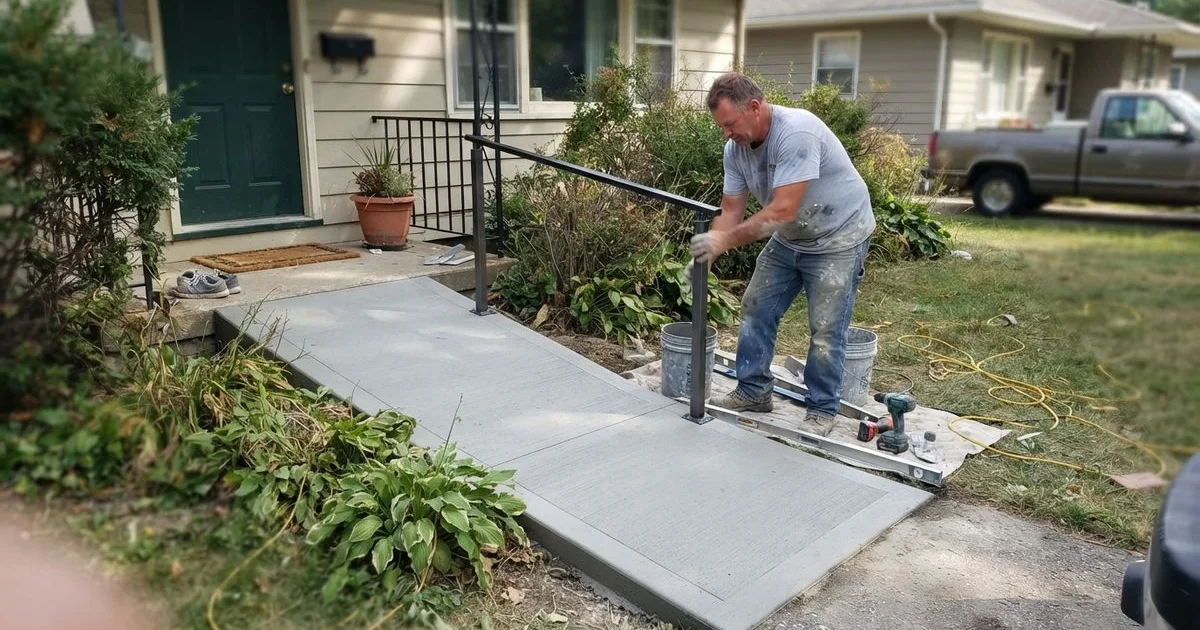
When a parent’s balance or mobility starts to change, the ground they walk on every day becomes more important than it ever was before. A few targeted concrete changes can meaningfully reduce fall risk without requiring a full property overhaul.
Why this is worth addressing proactively
Many families only think about walkway and driveway safety after a fall has already happened. Addressing the highest-risk spots ahead of time, while a parent is still steady on their feet, is both cheaper and far less stressful than reacting after an injury, and it lets you plan the work calmly rather than under pressure.
Where falls actually happen
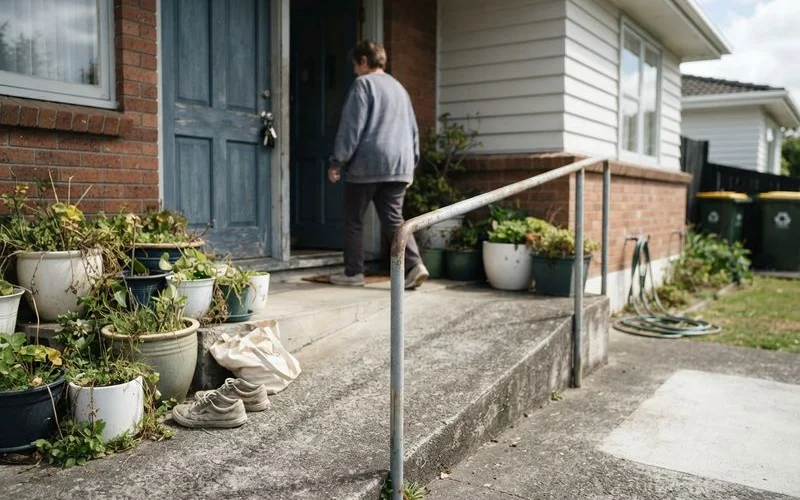
Falls near a home tend to cluster around a few predictable spots: a single uneven step or slab joint, a driveway-to-walkway transition with a lip or gap, a shaded area prone to moss or algae buildup, and any slope steeper than it needs to be. Walking the property specifically looking for these spots, rather than judging the whole surface at a glance, is the most useful first step.
Grading and drainage matter as much as the surface
Standing water on a walkway or driveway is both a slip hazard and a source of moss and algae growth, which makes the surface more slippery over time. Correcting the slope so water actually drains away, rather than pooling near a doorway or a frequently used path, addresses both problems at once and is often overlooked in favor of just resurfacing the visible area.
| Concern | Practical concrete fix |
|---|---|
| Uneven joint or single trip point | Targeted leveling or patch repair |
| Steep or awkward entry step | Ramp with a gradual, code-appropriate slope |
| Slippery shaded area | Coarser broom texture or non-slip sealer additive |
| Standing water on a path | Regrading to correct drainage slope |
Ramps done right
A ramp that is too steep is often worse than no ramp at all, since it can be harder to manage safely than a well-built set of steps. A contractor experienced in accessibility work builds to a gradual, appropriate slope and includes a stable, slip-resistant surface, not just a poured incline. If a family member uses or may soon use a wheelchair or walker, this is worth getting right the first time rather than adjusting later.
Finish choices that help
A standard broom finish already provides reasonable traction for most walkways. For areas with a known slip history, a coarser texture or a non-slip additive mixed into a sealer can add meaningful grip without changing the look much. Polished or heavily smoothed finishes, sometimes chosen for looks elsewhere on a property, are a poor choice for any path an aging parent uses regularly.
Prioritizing when the budget is limited
You do not need to redo an entire property at once. Start with the path used every day, typically the route from a parking spot or driveway to the main entrance, and address any single known trip hazard first. A well-targeted repair to the highest-risk area often improves day-to-day safety more than a cosmetic redo of a lower-traffic area that is merely old, not actually hazardous.
Lighting is part of the safety picture too
A well-graded, non-slip path still poses a risk in the dark. Pairing any concrete work with basic path lighting, whether wired fixtures or simple solar lights along the edge, is a low-cost addition that meaningfully reduces evening and early-morning fall risk, especially during shorter winter days.
Finding the right contractor for this kind of work
Accessibility-focused concrete work, ramps, regrading for drainage, and non-slip finishes, benefits from a contractor who has done it before rather than one who primarily does standard driveways. Our directory of patio and walkway contractors lists local companies sentiment-scored on workmanship, which is a reasonable starting point for finding someone comfortable with this kind of detail-oriented work.
Browse our directory homepage to compare contractors, and see our ranking methodology for how those scores are built.
FAQ
- What is the single most useful concrete change for an aging parent's home?
- A properly graded, non-slip walkway from the driveway or car to the main entrance is usually the highest-impact change, since that path gets used every single day and uneven or slick concrete there is a recurring fall risk.
- Do ramps need to meet a specific slope requirement?
- Yes, a gentle, gradual slope matters for both safety and usability, especially for a wheelchair or walker. A contractor experienced in accessibility work can build to the appropriate slope for the situation rather than guessing.
- Is a broom finish slippery, or do I need a special non-slip texture?
- A standard broom finish already provides reasonable slip resistance for most walkways. Areas prone to moss, algae, or standing water, especially shaded or low spots, benefit from an even coarser texture or a non-slip additive in the sealer.
- How do I prioritize if I cannot afford to redo everything at once?
- Start with the path used most often and any single spot with a known trip hazard, like a cracked step-down or an uneven joint. A targeted repair to the highest-risk spot often does more for safety than a full redo of an area that is merely worn but even.