
Concrete dust, sealers and curing chemicals: safety basics for homeowners
By Rod Burnett · Updated 2026-07-15
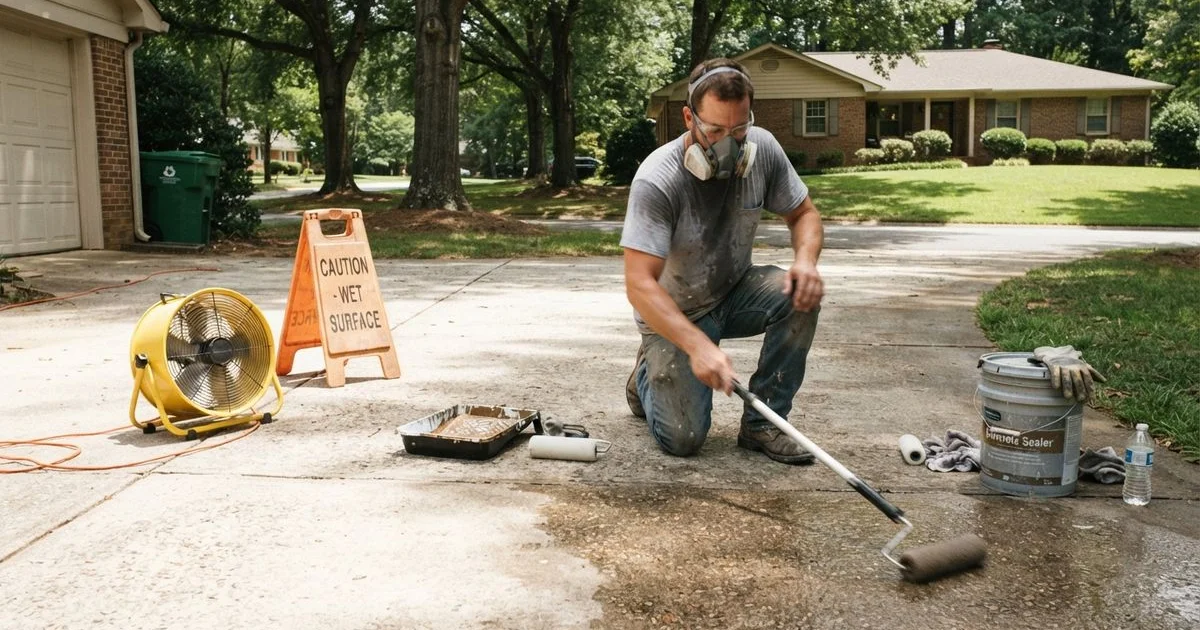
This is general safety information, not a substitute for product-specific safety data sheets or professional guidance; always follow the manufacturer’s instructions and safety warnings for any specific concrete, sealer, or curing product used on your property.
Most homeowners never think about the chemical side of a concrete project until they are standing next to a truck pouring wet concrete or handling a can of sealer for the first time. A few basics cover most of what you actually need to know.
Wet concrete is caustic
Fresh concrete has a high pH and can cause skin irritation or, with prolonged contact, a chemical burn. Anyone in direct contact with wet concrete, whether a worker or a homeowner attempting a small DIY patch, should wear gloves and boots and avoid letting it sit against skin. If it does get on skin, rinsing promptly with water is the standard response.
Concrete dust and silica
Cutting, grinding, or breaking up cured concrete releases fine dust that contains crystalline silica. Repeated, unprotected exposure to this dust over time is a recognized health hazard, which is why professional crews doing this kind of work wear respirators and often use water suppression to keep dust down. For a homeowner nearby during occasional cutting work, a basic dust mask and staying upwind of the work area are reasonable precautions.
| Material or activity | Main hazard | Basic precaution |
|---|---|---|
| Wet concrete (pouring, finishing) | Skin irritation, chemical burn | Gloves, boots, rinse skin promptly if exposed |
| Cutting or grinding cured concrete | Silica dust inhalation | Dust mask, stay upwind, water suppression if possible |
| Sealers and curing compounds | Fumes during application and curing | Ventilation, keep kids and pets away during cure period |
| Concrete sealer additives | Slip resistance is a benefit, some contain solvents | Check the product label for ventilation instructions |
Sealers and curing compounds
Sealers and curing compounds are applied as a liquid and typically need a period, often a day or more depending on the specific product and weather, to fully cure and off-gas. During that window, the area should be ventilated if applied in an enclosed space and kept clear of children and pets, more because of fumes and the risk of tracking wet sealer than any long-term hazard once fully cured. Read the product label, since cure times and ventilation needs vary between water-based and solvent-based formulations.
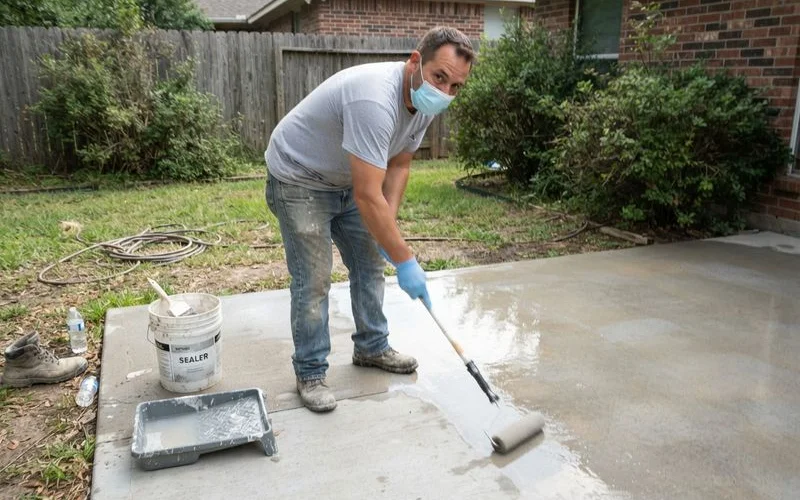
Keeping kids and pets away from active work
The two practical concerns are skin contact with wet concrete or fresh sealer, and the simple fact that a footprint or paw print in curing concrete is essentially permanent once it sets. Cordoning off the area for the first day or two of a pour, and again briefly during sealer application, avoids both problems without requiring anything more elaborate than tape or temporary fencing. For more on keeping a job site safe on pour day itself, see our guide on staying safe during a concrete pour.
Ventilation matters even outdoors
It is easy to assume that outdoor work does not need ventilation precautions, but fumes from a curing compound or sealer can still settle in a low, still corner of a yard, especially near a patio enclosed by fencing or a covered porch. If you can smell the product strongly while it cures, that area is worth keeping clear a little longer than the label’s minimum, particularly if young children play nearby.
What to ask a contractor about their safety practices
A reasonable question for any contractor is how they handle dust suppression during cutting or demolition, and whether they use water suppression or wet-cutting methods rather than dry grinding near occupied parts of a home. Crews that take this seriously usually have no problem explaining their process, while a vague answer is worth a follow-up question before work begins.
Working with a professional crew
A reputable contractor already follows standard safety practices for dust suppression and material handling on the job, which is one more reason licensing and experience matter beyond just the finished look of the work. Our ranking methodology touches on how professionalism and reliability factor into contractor scores in this directory, and our directory homepage is a good place to start comparing local contractors for your project.
FAQ
- Is concrete dust actually dangerous?
- Fresh concrete dust, especially from cutting or grinding cured concrete, contains fine silica particles that are harmful to breathe in over repeated exposure. A single brief exposure is a lower concern than the repeated exposure a worker cutting concrete daily might face, but a mask is a reasonable precaution for anyone nearby during cutting or grinding.
- Can wet concrete burn skin?
- Yes, wet concrete is caustic and can cause chemical burns with prolonged skin contact, which is why anyone working directly with it wears gloves and boots, and why it is worth rinsing skin promptly if wet concrete gets on it.
- Are concrete sealers safe once they have cured?
- Most sealers are designed to be safe for normal use once fully cured, though the curing period itself, often a day or more depending on the product and weather, should be treated as an active-fumes period with the area ventilated and kept clear of children and pets.
- Is it safe for kids or pets to be near a fresh concrete pour?
- It is best to keep kids and pets away from an active pour and the area for at least the first day or two, both because fresh concrete is caustic to skin and because a paw print or footprint in curing concrete is hard to fix once it sets.