
Staying safe during a concrete pour: kids, pets and hot-weather work
By Rod Burnett · Updated 2026-07-16
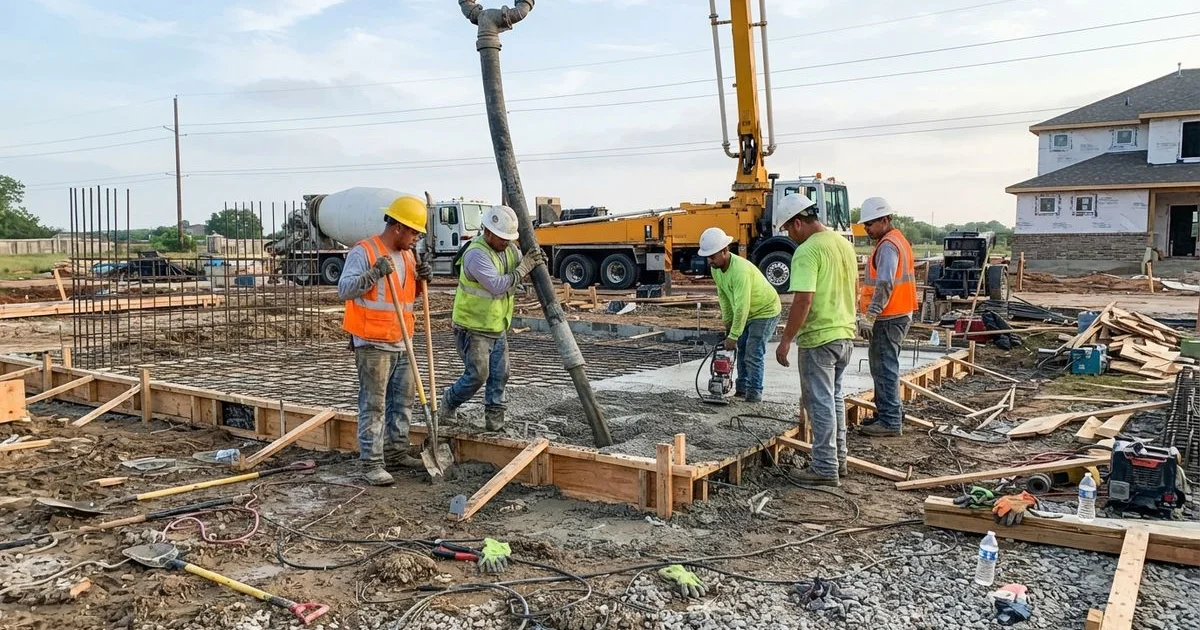
Pour day involves heavy equipment, a caustic material, and a tight window where timing matters. None of this is complicated to manage safely, but it helps to know what to expect and what your role is versus the crew’s.
What the crew handles
A professional crew manages the truck, the pour, the finishing, and the safety precautions around handling wet concrete directly. Your main responsibilities as the homeowner are preparing the site beforehand and keeping people and pets clear during and immediately after the work.
Before the crew arrives
Clear the work area of vehicles, toys, planters, and anything else that needs to move. Confirm with the contractor how long the driveway or work area needs to stay clear of traffic, and arrange alternate parking if needed for the household during that window. If access is tight, ask ahead of time whether the truck can reach the pour site directly or whether a pump or wheelbarrow relay will be used, since that affects both timing and where equipment will be staged in your yard.
Keeping kids and pets away
This is the single most important precaution for a household. Wet concrete is caustic and can irritate or burn skin with prolonged contact, and a footprint or paw print left in curing concrete is effectively permanent once it sets. Keep kids and pets indoors or in a fully separate part of the property during the pour and for the first day or two afterward while the surface is still soft enough to take an impression. For more on the chemical side of the job, see our guide on concrete dust, sealers and curing chemical safety.
| Timing | What to keep clear of the area |
|---|---|
| During the pour | People, pets, vehicles, delivery truck path |
| First 24 to 48 hours | Foot traffic, pets, anything that could leave a mark |
| First 5 to 7 days | Vehicle traffic |
Hot-weather considerations
In this region’s warmer months, heat affects both the crew’s working conditions and how the concrete behaves. Hot weather speeds up the setting process, which means the crew has a shorter window to finish the surface properly before it becomes too firm to work. A contractor experienced in the local climate adjusts scheduling, often pouring earlier in the day, and sometimes the mix itself to account for this. This is a good question to ask a contractor directly: how they handle pours during peak summer heat.
Staying clear of the equipment
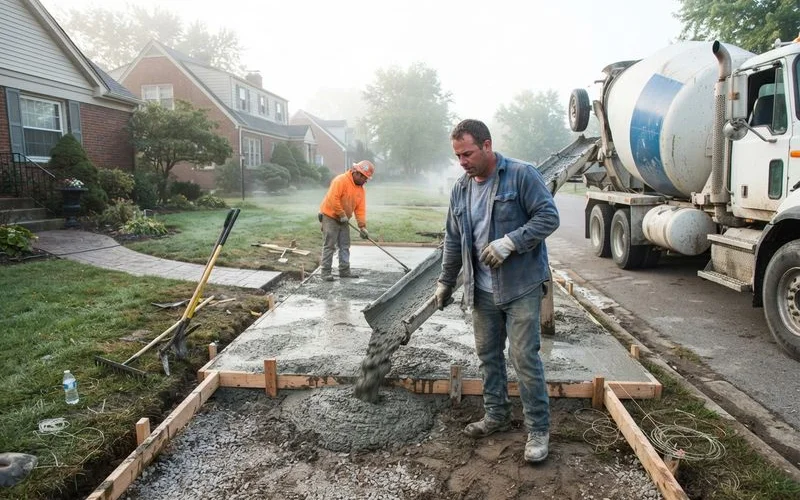
The delivery truck and its chute are heavy equipment operating in a relatively tight space, and the chute itself can swing as the crew directs the pour. It is best to watch from a distance rather than standing close to the truck or the active pour, both for your own safety and so the crew has room to work efficiently.
After the pour
Once the crew leaves, the main ongoing task is simply keeping the area clear for the timeline they give you, typically a couple of days before foot traffic and closer to a week before vehicles. A cordon of tape or temporary fencing is often the simplest way to enforce this with kids or pets in the house.
What to have ready in case of an accidental mark
Even with precautions, an occasional footprint or paw print does slip through, especially on a job with young kids or a curious dog in the house. Ask the crew before they leave how soon they can come back to smooth out a small impression if it happens in the first hour or two while the surface is still workable. Once the concrete has set past that point, an accidental mark generally has to be lived with or addressed as a small cosmetic repair later, rather than fixed on the spot.
A simple pre-pour checklist
Walking through a short checklist the morning of the pour catches most avoidable issues: vehicles and toys cleared from the area, kids and pets arranged to be elsewhere or safely contained, alternate parking confirmed if the driveway will be blocked, and a plan discussed with the crew for hot-weather timing if the forecast calls for it.
Our directory homepage is a good place to compare local concrete contractors before your project starts, and our ranking methodology explains how reliability and professionalism factor into how they are scored.
FAQ
- How do I keep kids and pets safe on pour day?
- Keep them indoors or in a separate part of the yard entirely while the crew is working and for at least the first day or two after, since wet concrete is caustic to skin and a footprint left in curing concrete is essentially permanent.
- Do concrete pours happen in summer heat, and is that a safety issue?
- Yes, pours happen year-round in this climate, and hot weather is mainly a concern for the crew working in direct heat and for how fast the concrete sets, since heat speeds up curing and can require quicker finishing work. Reputable crews adjust their schedule and mix to account for it.
- Should I move my car or block off the driveway myself?
- Yes, clear the work area of vehicles and any stored items before the crew arrives, and confirm with the contractor exactly how long the area needs to stay clear, since street parking may also need to be arranged in advance.
- Is it safe to be near the delivery truck when concrete is being poured?
- Give the truck and chute a wide berth. The equipment is heavy, the chute can swing, and the crew needs clear space to work efficiently, so it is best to observe from a distance rather than standing close by.