
Foundation and slab cracks: which ones are normal and which are a structural problem
By Rod Burnett · Updated 2026-06-27
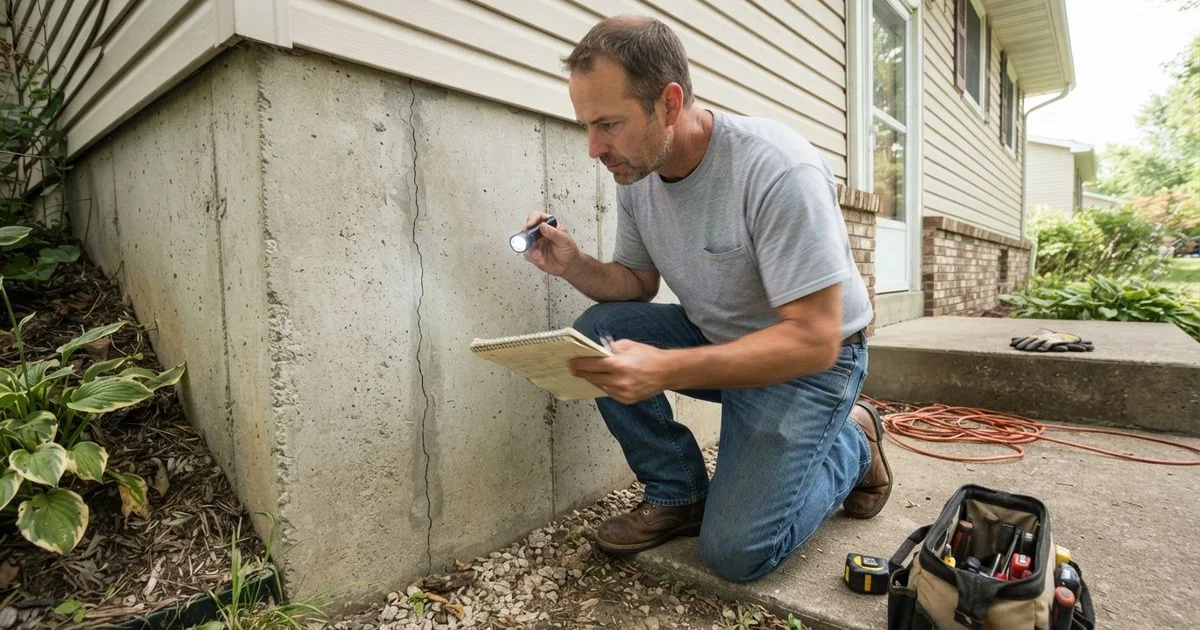
This is general information to help you decide whether a crack needs a closer look; it is not a structural engineering assessment, and any crack you are genuinely worried about deserves an in-person inspection.
Every concrete foundation and slab develops some cracking over its life. That fact alone tends to alarm homeowners more than it should, because most cracking is cosmetic and expected. The goal here is to help you tell the difference between normal and worth-a-call.
Why cracking happens at all
Concrete shrinks slightly as it cures, and it also responds to temperature swings, soil moisture changes, and the freeze-thaw cycle over the years. Control joints are cut into slabs specifically to direct that shrinkage into predictable, harmless lines rather than random cracks across the surface. A crack that follows a control joint line is doing exactly what it was designed to do.
Signs a crack is likely cosmetic
- Thin (hairline), vertical, and consistent in width along its length
- Follows a control joint or the edge of the slab
- Has not visibly changed in width over several months
- Appears on a slab that is otherwise level, with no doors or windows sticking nearby
Signs a crack deserves a closer look
- Diagonal, especially running toward a corner
- Wider at one end than the other (a “stair-step” pattern in block walls is a related warning sign)
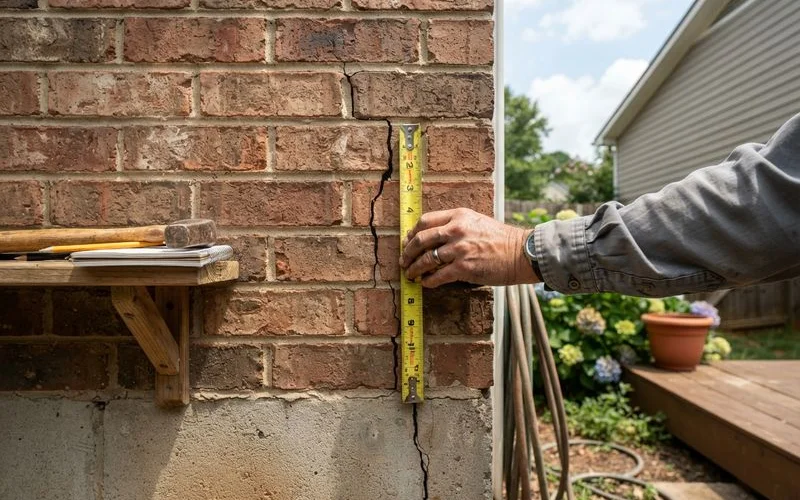
- Wider than about 1/4 inch
- Growing, which you can check by marking the ends and rechecking in a few weeks
- Paired with doors or windows that stick, uneven floors, or gaps opening between walls and ceilings
| Crack characteristic | Likely cosmetic | Worth a professional look |
|---|---|---|
| Direction | Vertical, straight | Diagonal, stair-step |
| Width | Hairline to about 1/16 inch, even | Wider than 1/4 inch, or tapering |
| Change over time | Stable for months | Visibly widening |
| Other symptoms | None | Sticking doors, uneven floors |
What sits underneath a crack matters
A crack in a foundation footing or slab is often a symptom of what is happening in the soil beneath it. Poor original grading, a footing that was not poured below the local frost line, or expansive clay soil that swells and shrinks with moisture can all put uneven pressure on a slab over years. This is one reason two houses built the same year in the same neighborhood can have very different cracking patterns: the soil under each one behaved differently.
When to get an inspection versus when to just monitor
If a crack falls clearly into the cosmetic category above, sealing it with a basic filler and checking on it once or twice a year is reasonable. If it shows any of the warning signs, especially growth over a few weeks or paired symptoms elsewhere in the house, schedule an inspection rather than waiting. Catching a foundation issue early is almost always cheaper than catching it after it has caused visible damage elsewhere in the structure.
Our directory of foundation and slab contractors lists local crews sentiment-scored on diagnostic accuracy and follow-through, which matters more here than almost any other concrete job, since the right fix depends entirely on correctly identifying the cause.
Documenting a crack the right way
A simple monitoring method works well: place a small dab of nail polish or a pencil mark at each end of the crack, along with the date, and check back every few weeks. If the crack grows past your marks, that is clear, objective evidence of movement rather than a guess based on memory, and it gives an inspector a useful starting point if you do decide to call one.
A reasonable next step
Photograph any crack you are unsure about, note the date, and revisit it in three to four weeks. If it has not changed and shows none of the warning signs above, it is very likely ordinary settling. If you would rather not wait and see, an inspection from a licensed contractor is a relatively small cost against the peace of mind, and against the risk of a real issue going unaddressed.
Start from our directory homepage to compare local contractors, and see our ranking methodology to understand how those scores are built.
FAQ
- Are hairline cracks in a foundation normal?
- Thin, vertical hairline cracks under about 1/16 inch wide are common as new concrete cures and shrinks, and they are usually cosmetic. They are worth watching but rarely a sign of a structural issue on their own.
- What crack shape is more concerning?
- Diagonal cracks, cracks that are wider at one end than the other, cracks wider than about 1/4 inch, or cracks paired with a door or window that suddenly sticks are more likely to point to real movement in the foundation and are worth a professional look.
- Can I fix a foundation crack myself?
- Small, stable hairline cracks can often be sealed with a basic concrete crack filler as a homeowner project. Anything wider, growing, or associated with visible settling should be assessed by a professional first, since sealing over an active structural issue just hides it.
- How urgently should I deal with a crack once I notice it?
- Take a photo with a coin or ruler next to it and check back in a few weeks to see if it has grown. A stable, thin crack is not usually urgent. A crack that is visibly widening, especially with other warning signs, is worth scheduling an inspection for soon rather than waiting.