
Emergency concrete repair: sinkholes, storm damage and what to do first
By Rod Burnett · Updated 2026-06-21
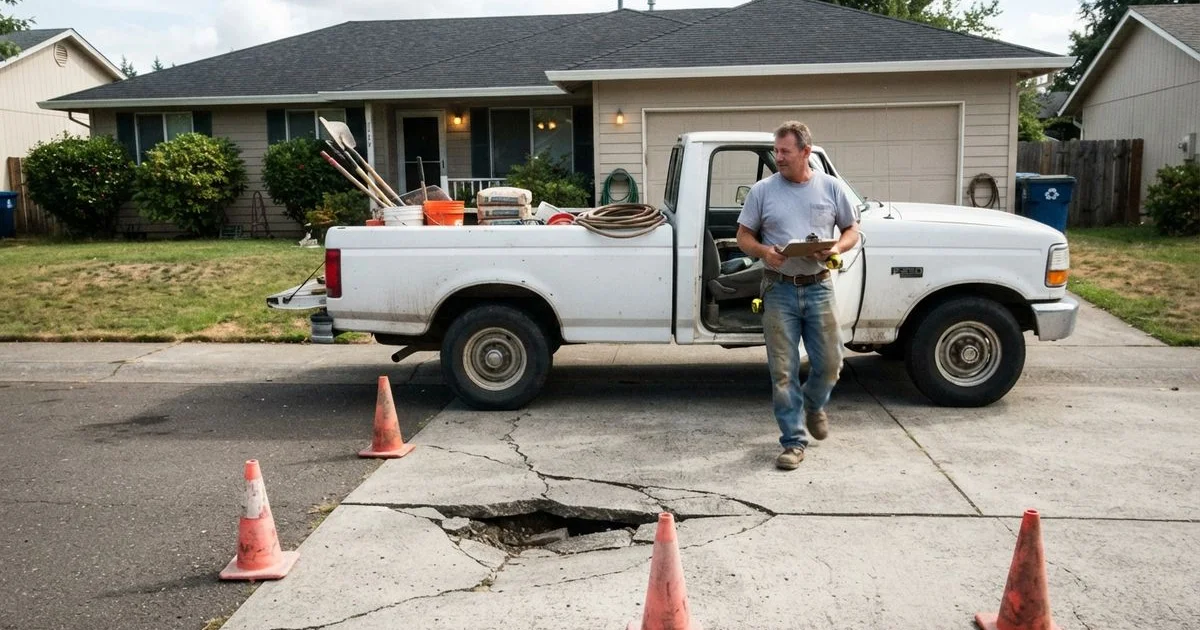
A concrete emergency rarely looks like the rest of your project timeline. A slab that heaves overnight after heavy rain, a sinkhole that opens under a driveway, or storm debris that cracks a walkway all call for a different response than a routine repair. Here is what actually matters in the first few hours and how the claims and repair process tends to play out.
What counts as an emergency
Not every crack is urgent. Treat these as emergencies:
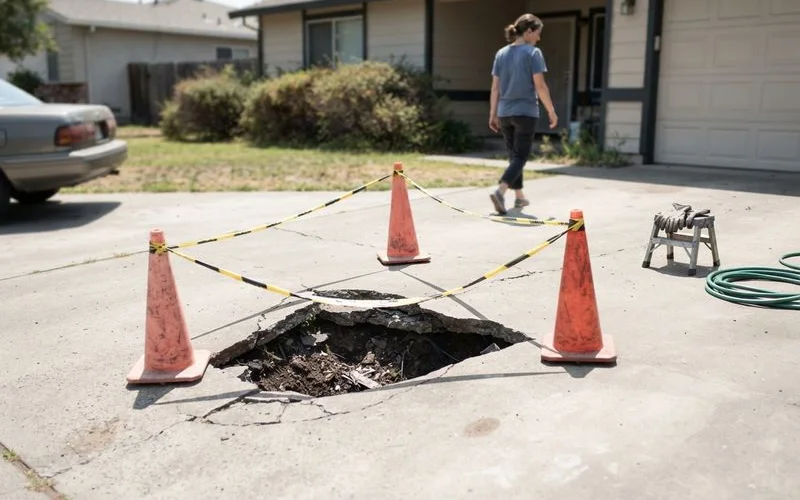
- A sinkhole or sudden depression, especially near a foundation, septic line, or anywhere someone walks
- A slab that has visibly heaved, shifted, or dropped after flooding or a burst pipe
- Storm or fallen-tree damage that leaves sharp edges, exposed rebar, or a tripping hazard
- Driveway or walkway failure that blocks safe access to a home, especially for anyone using a wheelchair or walker
Ordinary hairline cracks, minor surface spalling, or slow settling over months are real issues but not same-day emergencies. Save those for a scheduled inspection instead of paying an emergency-service premium. Freeze-thaw cycles cause a lot of that slower cracking in this climate; the seasonal concrete care guide covers what counts as normal wear and what to watch before it turns into a bigger repair.
The first few hours
Keep the area clear. Rope it off or block it with furniture if you need to keep kids or pets away overnight. Photograph the damage from several angles and note the date, and if a storm or specific event caused it, save any weather alerts or news coverage that document the event. Do not try to fill a sinkhole with dirt or gravel yourself: it can hide how large the underground void actually is and make the eventual repair more expensive.
Insurance: what is usually covered and what is not
Whether a claim is approved comes down to cause. Sudden, external events like a fallen tree, flooding from a named storm, or a burst municipal water line are more likely to be covered. Gradual settling, poor original drainage, or normal wear from age is typically excluded, since most policies treat that as a maintenance issue rather than a covered loss. Call your insurer before repairs start if you plan to file a claim: several companies require an adjuster to see the damage first, and repairing before documentation can complicate or void the claim.
| Likely cause | Insurance outlook |
|---|---|
| Fallen tree or storm debris | Often covered |
| Flooding from a named storm event | Often covered, check flood policy separately |
| Burst pipe or line under the slab | Sometimes covered, depends on cause of the break |
| Gradual settling or age-related cracking | Usually not covered |
| Poor original drainage or grading | Usually not covered |
What same-day service actually looks like
An emergency call typically gets you a fast assessment and temporary stabilization, such as barricading, patching an active leak point, or shoring up a dangerous edge, within the same day. Full repair or replacement, especially for a driveway or slab that needs a proper pour, still takes the normal several days once materials, forms, and curing time are factored in. A same-day promise on the assessment does not mean a same-day finished driveway.
Finding a contractor who can respond quickly
Not every concrete crew offers true emergency response, so it is worth checking ahead of time rather than during a crisis. Our directory of same-day and emergency concrete service providers lists local contractors sentiment-scored on responsiveness, so you can see which ones actually show up quickly rather than just claiming to. Save one or two numbers before you need them.
After the immediate danger is handled
Once the area is safe, get at least one full repair quote before agreeing to permanent work, even if the same crew handled the emergency response. The urgency of the initial call does not mean you have to accept the first full-repair price without comparing it, and a second opinion rarely delays a job that is already stabilized. Our directory homepage is a good starting point for comparing multiple local contractors side by side once the immediate danger has passed.
You can read more about how contractors in this directory are scored, including responsiveness and reliability signals from real customer feedback, on our ranking methodology page.
FAQ
- Is a sudden sinkhole or sunken slab a real emergency?
- Treat it as one if it is near a foundation, a walkway people use daily, a driveway that blocks a car from parking safely, or anywhere a pet or child could step into a hole. Cordon off the area and call a contractor who offers same-day or 24-hour service rather than waiting for a routine appointment slot.
- Does homeowners insurance cover storm-damaged concrete?
- It depends on the cause and your policy. Damage from a fallen tree, flooding, or a covered storm event is often included, but normal settling, ground shifting, or gradual cracking usually is not. Photograph the damage right away and call your insurer before repairs start, since some policies require documentation before work begins.
- How fast can an emergency concrete crew actually get to a property?
- Same-day service is common for genuine emergencies like a sinkhole, a heaving slab after flooding, or a driveway that has become unsafe to use. Full replacement work still takes days once scheduled, even if the initial response is fast, because concrete needs time to cure properly.
- What should I do myself before the contractor arrives?
- Keep people and pets away from the area, take photos and video from multiple angles, note the date and any recent weather, and avoid driving or walking over unstable concrete. Do not attempt to fill a sinkhole yourself; it can mask a larger void underneath.