Freeze-thaw damage and seasonal concrete care in Charlotte Metro
By Rod Burnett · Updated 2026-07-18
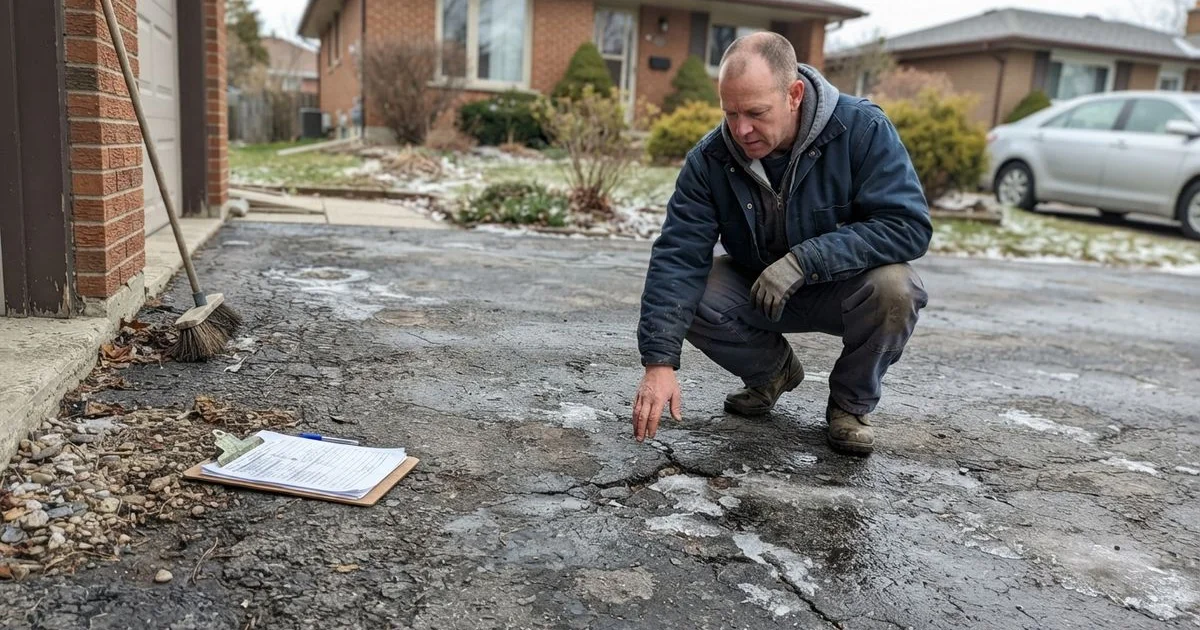
Charlotte’s climate is milder than much of the country, but it still delivers enough freezing nights each winter, along with hot, humid summers, to affect how long a concrete driveway or patio holds up. A little seasonal awareness extends the life of the surface without much effort.
What freeze-thaw cycling actually does
Concrete is not perfectly solid at a microscopic level. Water finds its way into small cracks, pores, and the surface layer, and when it freezes, it expands, putting outward pressure on the surrounding concrete. A single freeze does little damage, but repeated cycling over multiple winters gradually widens existing small cracks and imperfections. This is a slow process, not a single-season event, which is why sealing and basic maintenance make a real difference over the life of the surface.
Why air-entrained concrete matters
Concrete mixed with intentional microscopic air pockets (air-entrained concrete) handles freeze-thaw cycling much better than a standard mix, since those air voids give the expanding ice somewhere to go without pushing against the surrounding material as hard. Most driveway and patio concrete poured in this region already uses an air-entrained mix for exactly this reason, but it is a reasonable question to confirm with a contractor before a new pour.
Seasonal maintenance that helps
| Season | Useful maintenance step |
|---|---|
| Fall | Clean debris from control joints and cracks before winter; consider resealing if due |
| Winter | Use a calcium chloride or CMA-based deicer sparingly rather than plain rock salt |
| Spring | Inspect for new cracking after the winter freeze-thaw season |
| Summer | Reseal if the surface is due, since heat helps sealer cure properly |
Snow and ice removal technique matters too
Beyond which deicer you use, how you clear snow and ice affects the surface as well. A plastic-edged shovel is gentler on the finish than a metal-edged one, which can chip or scratch a stamped or colored surface over repeated winters. Chipping away at stubborn ice with a sharp tool is one of the more common ways homeowners accidentally damage a decorative finish themselves.
Deicing products: what to avoid
Standard rock salt (sodium chloride) can accelerate surface scaling and damage on concrete, particularly on newer concrete that has not fully cured or on any unsealed surface. Calcium chloride and CMA-based (calcium magnesium acetate) deicers are gentler alternatives, though even these are best used sparingly rather than as a routine solution to ice.
Sealing as ongoing protection
A sealer’s main seasonal benefit is reducing how much water the concrete surface absorbs in the first place, which directly reduces how much water is available to freeze and expand inside the material. Resealing every 2 to 3 years, more often for a heavily used driveway or a stamped and colored surface, is a reasonable interval for most homeowners in this climate.
When seasonal wear turns into a real repair
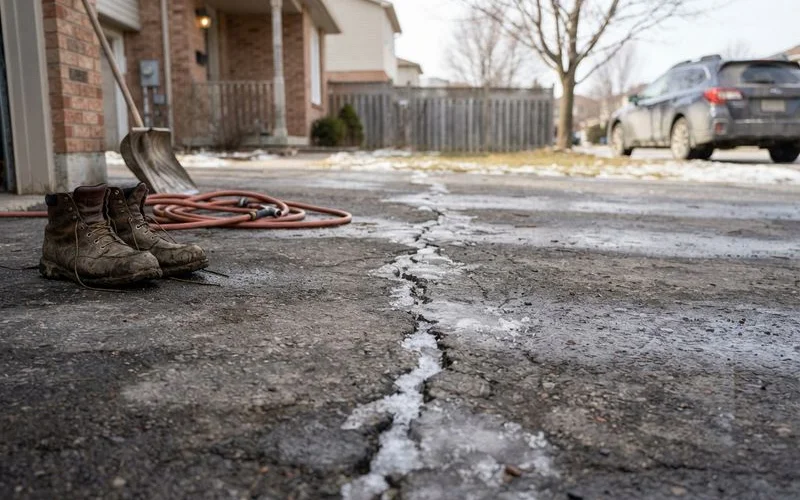
If a crack that appeared or grew over a winter is wider than a hairline, or if you notice a section of surface flaking away (a sign of spalling), it is worth getting a professional look before another winter cycle makes it worse. Catching this kind of seasonal damage early, while it is still a minor repair, is meaningfully cheaper than waiting until it becomes a larger resurfacing job. If damage shows up suddenly after a storm rather than gradually over a season, our guide on emergency concrete repair covers what counts as urgent versus what can wait.
Newer concrete needs extra attention its first winter
A slab poured in the fall or early winter has less time to fully cure and reach its rated strength before facing its first freeze-thaw season. If you are having new concrete poured heading into colder months, ask the contractor about curing time relative to the forecast, and consider holding off on deicing products entirely for at least the first full winter if the schedule allows it.
Getting ahead of it
A short annual check each fall, inspecting for cracks, cleaning debris out of joints, and confirming whether a reseal is due, is a low-effort way to protect a driveway or patio investment against this region’s seasonal swings. Browse our directory homepage to find a local contractor for a seasonal inspection or repair, and see our ranking methodology for how contractors in this directory are scored.
FAQ
- Does Charlotte get cold enough for freeze-thaw damage to matter?
- Yes, the area sees enough freezing nights each winter for freeze-thaw cycling to be a real factor over the life of a driveway or patio, even though it is milder than colder climates further north.
- What is freeze-thaw damage exactly?
- Water gets into small cracks or the pores of concrete, then freezes and expands, widening the crack slightly. Repeated cycles of this over many winters can turn a small crack into a larger one over several years.
- Does sealing a driveway actually help with freeze-thaw damage?
- Yes, a sealer reduces how much water gets absorbed into the surface in the first place, which reduces the amount of water available to freeze and expand. Resealing every 2 to 3 years is a reasonable maintenance interval for most homeowners.
- Should I use rock salt to melt ice on my driveway?
- Standard rock salt can accelerate surface damage on concrete, especially newer concrete or an unsealed surface. A calcium chloride or CMA-based deicer, used sparingly, is generally gentler on concrete than plain rock salt.