Stamped and decorative concrete cost: what you pay for pattern, color and sealing
By Rod Burnett · Updated 2026-07-07
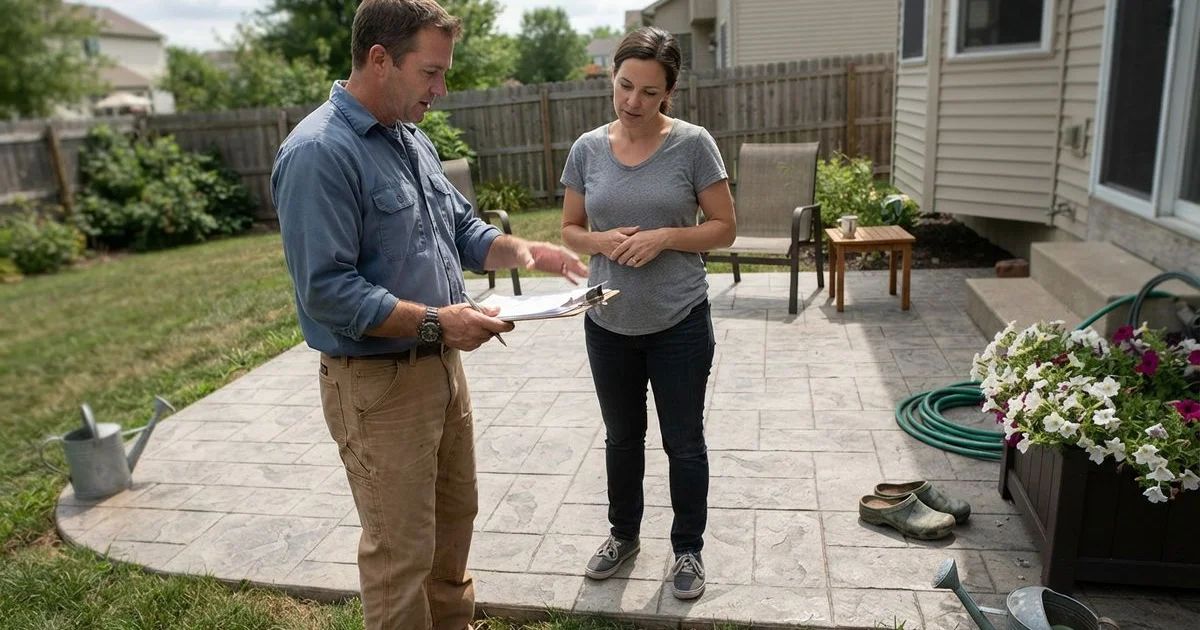
Decorative concrete covers a range of finishes, stamped patterns, exposed aggregate, colored and sealed surfaces, and each one adds a different amount to the base cost of a plain slab. Understanding what you are actually paying for helps you pick a finish that fits your budget rather than guessing.
Why decorative finishes cost more
A plain broom finish is fast: pour, screed, drag a broom across the surface, done. Every decorative technique adds a step that takes skill and time. Stamping presses textured mats into the concrete while it is still workable, requiring careful timing since the concrete has to be firm enough to hold the pattern but soft enough to take it. Exposed aggregate involves washing the surface paste away at just the right moment to reveal the stone beneath without disturbing it. Coloring, whether integral (mixed into the batch) or applied to the surface, adds material cost and an extra labor step.
Rough cost comparison by finish type
| Finish | Relative cost vs plain broom | What drives the extra cost |
|---|---|---|
| Plain broom finish | Baseline | None, standard technique |
| Colored or sealed (no pattern) | +25% to +35% | Coloring agent, sealer application |
| Exposed aggregate | +30% to +45% | Surface washing technique, aggregate quality |
| Stamped pattern | +50% to +70% | Stamping mats, coloring, precise timing |
What affects price within the stamped category itself
Not all stamped jobs cost the same. A simple, single-color pattern with a common mat design costs less than an intricate multi-color pattern meant to mimic natural stone or brick. Larger continuous areas can sometimes see a slightly lower per-square-foot rate than very small or oddly shaped areas, since setup time gets spread across more square footage. Color that is antiqued or layered with a release agent for depth also adds labor time compared to a single flat color.
Budgeting for upkeep, not just installation
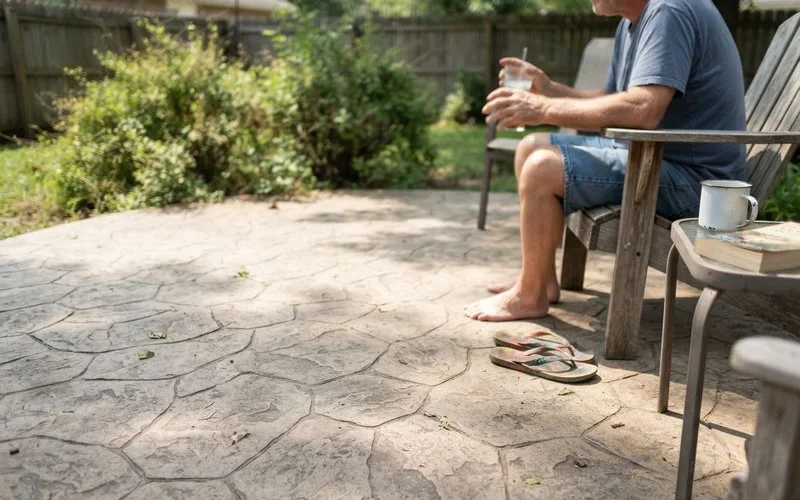
A decorative finish is not a one-time cost. Sealer protects both the color and the surface from wear, and it typically needs reapplying every 2 to 3 years, sooner in high-traffic areas or full sun exposure. Skipping resealing does not damage the concrete itself right away, but it does let the color fade and the surface lose its water resistance faster, which shortens how long the finish looks good even though the slab underneath is fine.
Is the extra cost worth it
That depends on what you are trying to achieve. If the goal is a specific look, matching a home’s stone or brick exterior, or simply avoiding the plain gray look of standard concrete, the added cost buys something a plain finish cannot. If budget is the primary constraint, a plain finish with a simple color tint often gets you most of the visual upgrade at a fraction of the cost difference of a full stamped pattern.
Finding a specialist
Stamping and coloring take more skill than plain flatwork, and quality varies noticeably between contractors who do it occasionally and those who specialize in it. Our directory of stamped and decorative concrete contractors lists local specialists sentiment-scored on craftsmanship, which is worth checking before choosing based on price alone for this type of work.
Repair considerations unique to decorative finishes
A crack or repair on a plain slab is relatively easy to patch invisibly. A repair on a stamped or colored surface is much harder to blend in, since matching an existing pattern, color, and years of weathering exactly is difficult even for an experienced crew. This is worth factoring into your decision: a decorative finish looks better on day one, but a repair years later is more likely to be visible than it would be on a plain surface. See our guide on concrete repair, resurfacing and leveling cost for what that kind of repair typically runs.
Getting an accurate quote
Ask for the quote broken out by base slab cost and decorative add-on separately, so you can see exactly what the pattern and color are adding. Browse our directory homepage to compare specialists, and see our ranking methodology for how those craftsmanship scores are built.
FAQ
- How much more does stamped concrete cost than plain concrete?
- Stamped concrete typically runs 50 to 70 percent more than a plain broom finish of the same size, because of the extra labor, stamping tools, and coloring agents involved. A colored or sealed plain finish sits in between the two.
- Does stamped concrete need more maintenance than plain concrete?
- Yes, somewhat. Stamped and colored concrete generally needs resealing every 2 to 3 years to protect the color and pattern, while a plain broom finish can go longer between any maintenance beyond basic cleaning.
- Is exposed aggregate cheaper than stamped concrete?
- Usually yes, exposed aggregate tends to cost less than a full stamped pattern, since it involves washing away the surface paste to reveal aggregate already in the mix rather than pressing in a separate pattern, though it still costs more than a plain finish.
- Does the pattern choice affect the price within stamped concrete?
- Yes. More intricate patterns with multiple colors or a stone-look texture generally cost more than a simple, single-color pattern, since they take more time and skill to execute well.