
Concrete repair, resurfacing and leveling cost: what drives the price
By Rod Burnett · Updated 2026-06-23
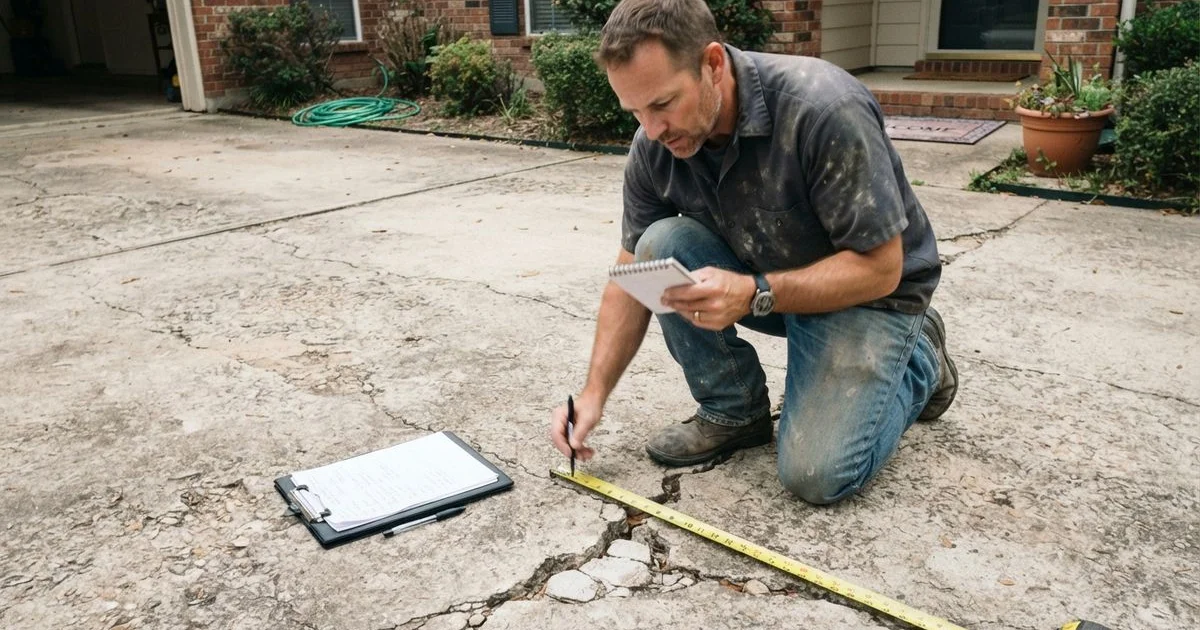
Concrete repair pricing varies more than driveway or patio installation pricing, because “repair” covers a wide range of actual work: a cosmetic crack fill, a full resurfacing overlay, or lifting an entire sunken slab back into place. Knowing which category your problem falls into is the first step to getting an honest quote.
Three tiers of repair, three different price ranges
Minor repair covers surface cracks, small chips, or light spalling. This is the least expensive category and often addressable in a single visit.
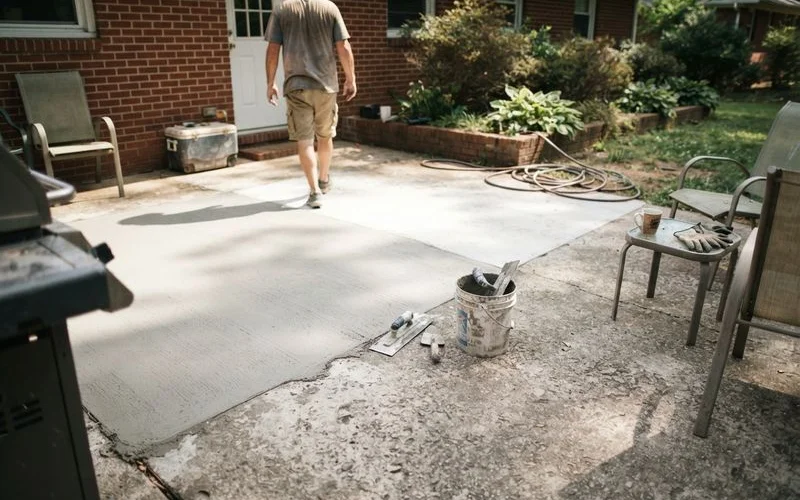
Resurfacing applies a new thin layer or overlay across an existing slab to fix widespread surface wear, discoloration, or a network of hairline cracks without replacing the whole slab. It costs more than a spot repair but far less than tearing out and repouring.
Leveling (mudjacking or foam injection) raises a sunken slab back to grade. This addresses settling, not surface cosmetics, and pricing depends heavily on how much the slab has dropped and how large the area is.
| Repair type | What it fixes | Relative cost |
|---|---|---|
| Minor crack or chip repair | Surface cracks, small spalling | Lowest |
| Resurfacing or overlay | Widespread surface wear, hairline cracking | Moderate |
| Mudjacking | Sunken slab, using cement slurry | Moderate to higher, scales with area |
| Foam leveling | Sunken slab, using polyurethane foam | Higher per job, faster cure |
| Full replacement | Structural failure, extensive damage | Highest |
What pushes a repair estimate up
Severity matters more than square footage alone. A contractor pricing a repair job is really pricing three things: how much surface area is affected, how severe the damage is (a hairline crack versus a slab that has visibly sunk or shifted), and whether the job can be scheduled normally or needs to happen fast. Emergency or same-day scheduling for an urgent repair, such as a driveway that has become a tripping hazard, typically adds a premium over standard scheduling.
Access matters too. A slab in a side yard reachable only by hand-carrying equipment through a gate costs more to work on than one a truck can pull straight up to.
How the corpus of reviews in this market talks about repair work
Fair pricing and responsive communication are the two praise themes that come up most often across the contractors in this directory, and they matter especially for repair work, where the honest diagnosis behind the price is harder for a homeowner to verify than a straightforward new pour. A contractor willing to explain the reasoning behind a repair recommendation, not just quote a number, is worth weighing more heavily than one offering the lowest price alone.
When repair is not the honest answer
A contractor who only patches the surface of a slab that is failing underneath is not doing you a favor by keeping the quote low. If cracking keeps returning in the same spot, or a section keeps re-settling after leveling, the underlying cause, often a washed-out base, poor original drainage, or tree root movement, needs to be addressed or the repair will not hold. Ask directly what caused the damage, not just what the fix costs. A contractor who cannot answer that question is guessing at the price along with the cause.
Getting quotes you can actually compare
Ask each contractor to specify which of the three tiers above they are quoting, whether they are addressing the underlying cause or just the visible symptom, and what warranty, if any, comes with the work. A repair with no warranty at all is a signal to get a second opinion, particularly for leveling work where a return of settling within a year or two is a known risk if the soil issue was not properly addressed. If you’re weighing this repair against an upcoming home sale, the guide on fixing a driveway or patio before you sell covers how buyers and inspectors tend to treat this kind of damage.
Our directory of concrete repair and resurfacing contractors lists local crews with sentiment-scored reviews, which is a useful way to see who tends to diagnose the actual cause versus who just patches and moves on.
A quick gut check before you commit
If a quote seems unusually low for the described tier of work, ask what base preparation is included and whether the price is fixed or subject to change once work starts. Start from our directory homepage to compare a few local contractors before committing to one, and see our ranking methodology for a closer look at how we score and rank them.
FAQ
- Is it cheaper to repair concrete or replace it?
- Repair is almost always cheaper up front for minor to moderate damage like surface cracks or small areas of spalling. Once a slab has sunk significantly, has widespread cracking, or the base underneath has failed, replacement often ends up costing less than repeated repairs over a few years.
- What is the difference between mudjacking and foam leveling, and does one cost more?
- Mudjacking pumps a cement-based slurry under a sunken slab to raise it, while foam leveling injects a lightweight polyurethane foam that expands to lift the slab. Foam leveling usually costs more per job but cures faster and adds less weight, which matters on soil that is already unstable.
- Why did a small crack repair turn into a bigger, more expensive job?
- A crack is often a symptom rather than the whole problem. If a contractor finds that the ground underneath has washed out or the original base was never compacted properly, patching the surface will not hold for long, and the honest fix becomes a larger resurfacing or leveling job.
- How long does a typical repair or resurfacing job last?
- A properly done crack repair or resurfacing job commonly holds up for 8 to 15 years depending on the method, the traffic the surface sees, and how well the underlying cause was addressed rather than just the surface symptom.