Concrete contractor vs masonry contractor: what's the difference and who to hire
By Rod Burnett · Updated 2026-06-29
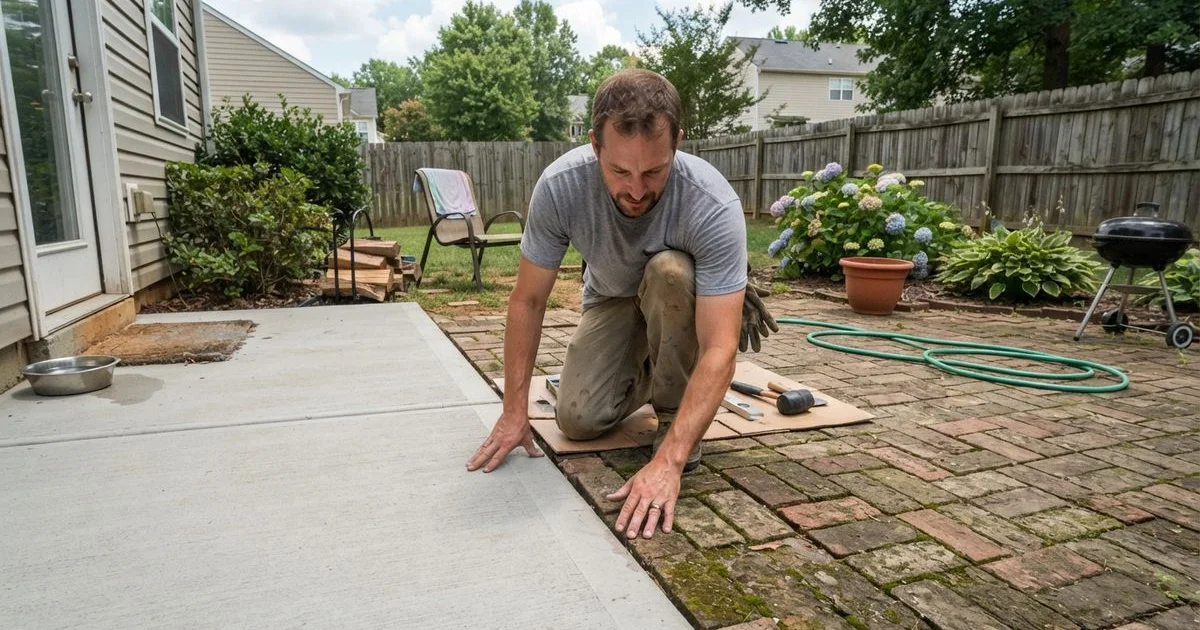
“Concrete” and “masonry” get used almost interchangeably in casual conversation, which causes real confusion when it is time to hire someone. They are related trades that often work side by side on the same project, but they do fundamentally different things.
What a concrete contractor does
Concrete contractors work with poured, flowable material: driveways, patios, walkways, foundations, slabs, and sidewalks. The work involves forming, pouring, and finishing a continuous surface, then letting it cure into a solid slab. Reinforcement (rebar or wire mesh) and finish choices (broom, stamped, exposed aggregate) are part of this trade’s core skill set.
What a masonry contractor does
Masons build with individual units, laid one at a time with mortar joints between them: brick, block, natural stone, and pavers. Retaining walls, brick and stone veneers, chimneys, fireplaces, outdoor kitchens, and paver patios all typically fall under masonry rather than concrete. The craft is different too, since it depends on precise unit placement and joint work rather than finishing a poured surface.
| Project type | Usually concrete | Usually masonry |
|---|---|---|
| Driveway | Yes | Sometimes (paver driveways) |
| Patio (poured slab) | Yes | No |
| Patio (pavers or flagstone) | No | Yes |
| Foundation | Yes | No |
| Retaining wall | Sometimes (poured) | Sometimes (block/stone) |
| Chimney or fireplace | No | Yes |
| Brick or stone veneer | No | Yes |
| Walkway (poured) | Yes | No |
| Walkway (pavers) | No | Yes |
Where the two overlap
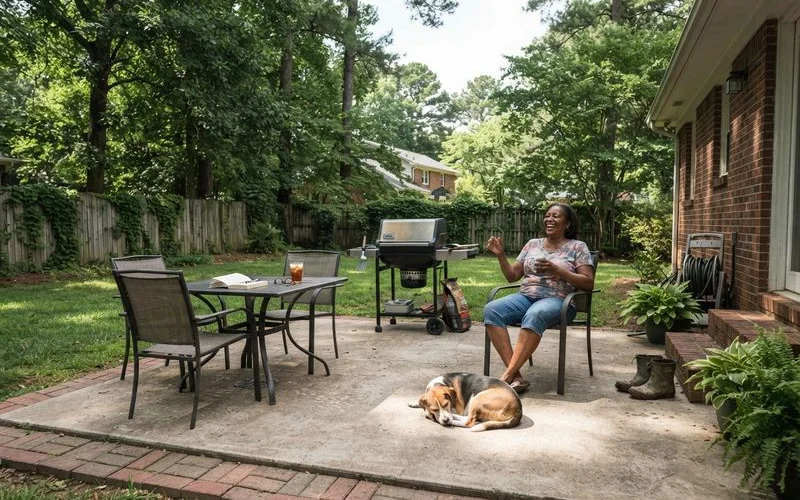
A lot of real projects mix both trades. A patio might have a poured concrete base with a stone veneer fire pit built on top. A driveway might be concrete with a decorative brick border. A retaining wall might be poured concrete core with a stone or brick face. This is why plenty of companies in this market offer both services, either with an in-house team for each or by subcontracting one piece to a specialist. If you’re also weighing the paving material rather than the trade, the guide comparing concrete and asphalt for a driveway covers that decision separately.
How to figure out which one your project needs
Start with the material you want in the finished result. If you picture a smooth, continuous surface, whether plain, stamped, or stained, that is concrete work. If you picture individual bricks, blocks, stones, or pavers with visible joint lines, that is masonry. For anything combining both, like a paver patio bordering a concrete pool deck, ask companies directly whether they handle both trades in-house or coordinate with a subcontractor, since that affects both scheduling and who is accountable if something goes wrong.
Why it matters for getting a good quote
Asking a pure concrete crew to bid a stone retaining wall, or asking a masonry-focused company to bid a large poured driveway, tends to produce either an inflated quote (because they will subcontract the unfamiliar part) or a job that is technically fine but not their strongest work. Naming the right trade when you request quotes gets you more competitive pricing and a contractor who is actually specialized in what you need.
Our directory of masonry contractors lists local masons sentiment-scored on craftsmanship and reliability, separate from the concrete-focused categories in this directory, so you can shortlist the right trade for your specific project from the start.
Getting quotes when a project spans both trades
For a project that genuinely needs both, a concrete patio base with a stone veneer feature, for example, ask upfront whether the company coordinates the sequencing itself or expects you to manage two separate contractors and schedules. A single point of contact tends to reduce the risk of the two crews’ timelines conflicting, but it can also mean a markup on the subcontracted portion, so it is worth asking how pricing works either way.
One more thing to check
Ask any contractor, concrete or masonry, whether they are licensed and insured for the specific type of work you need, and confirm it rather than taking their word for it. Our ranking methodology explains how we factor licensing and insurance signals into a contractor’s score, and you can browse the full directory homepage to compare options across both trades.
FAQ
- Is a mason the same thing as a concrete contractor?
- No. A concrete contractor pours and finishes flatwork like driveways, patios, and slabs. A mason builds with individual units like brick, block, and stone, typically using mortar. Some companies do both, but they are distinct skill sets.
- Who do I call for a retaining wall?
- It depends on the material. A poured concrete retaining wall is concrete contractor work. A block, brick, or stone retaining wall is masonry work. Some larger jobs use both, with a mason building a stone veneer over a poured concrete structural wall.
- Can one company do both concrete and masonry?
- Yes, many companies in this directory offer both services, especially for projects like a patio with a stone-veneer fire pit or a driveway with a brick border. It is worth asking directly whether a company has in-house masons or subcontracts that part of the job.
- Which trade handles chimney and fireplace repair?
- That is masonry work, since chimneys and most fireplaces are built from brick or stone units rather than poured concrete.